
What a mobile gallery changes on a festival stage day
Rachel Whitcombe
6 min read
A look at how our mobile gallery and signal feeds shape multi-camera coverage of concerts, festivals and parties, from the first cable run to the last act coming off stage.
Why we built coverage around a mobile gallery
Most of the live events we are asked to cover do not have a studio nearby, and many do not have a room that could serve as a control room either. A marquee, a village hall, a car park behind a stage: these are the places where concerts and parties actually happen. Our answer has been a mobile gallery that travels with the crew and gives the director a proper working position wherever the event is held.
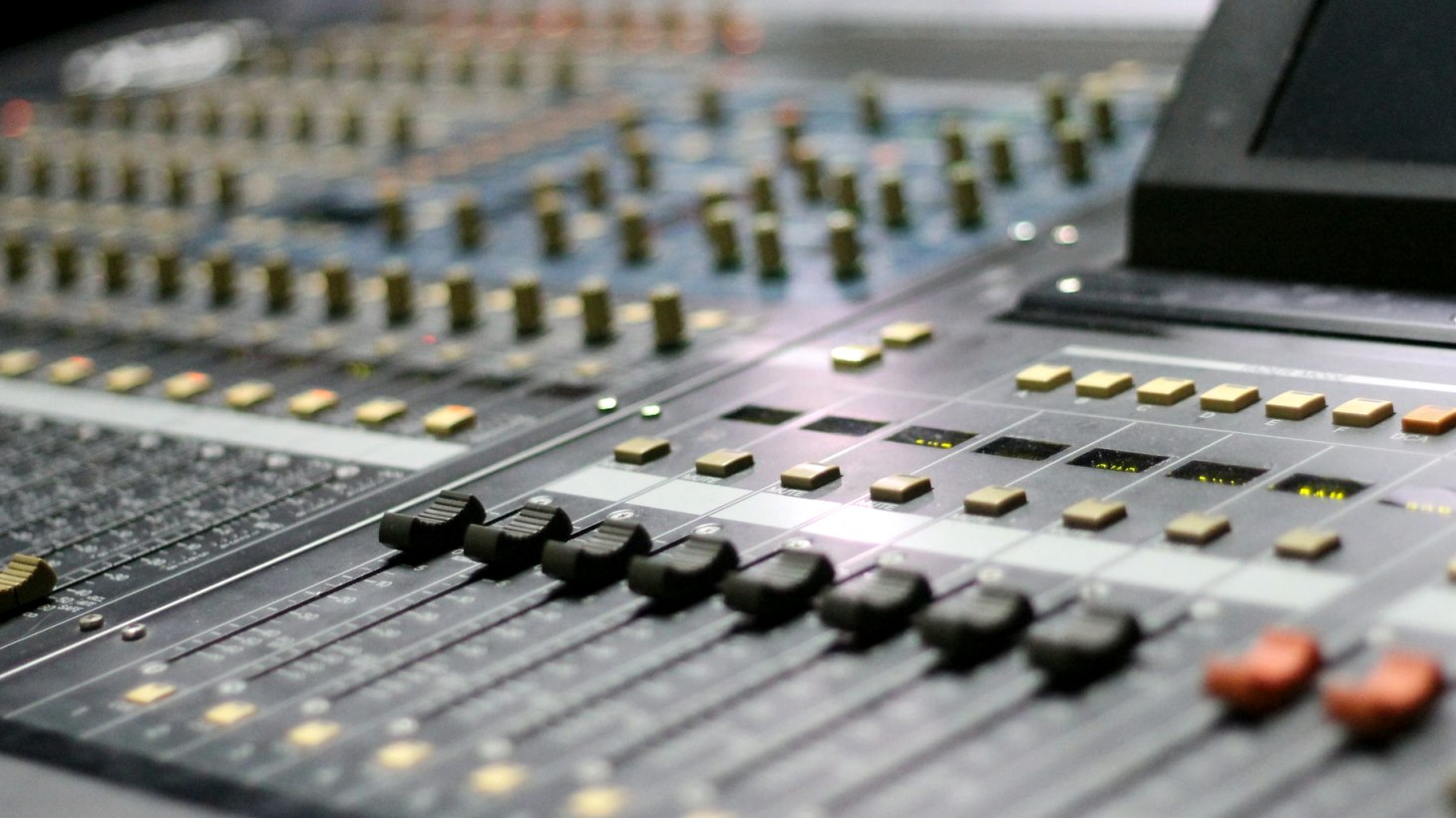
The gallery holds the vision mixer, monitoring, intercom and recording in one self-contained space. That means the director sees every camera on a wall of monitors, talks to every operator by name and cuts the show with the same calm she would have in a fixed studio. Rachel Whitcombe, who writes this note, has directed from rooms with far less and knows how much a settled gallery matters to the crew around it.
What the venue provides becomes a short list: a safe place to park or set up, power with some capacity to spare, and a route for cables to the stage. Everything else we bring and test before the doors open.
- One self-contained control position for the director
- Vision mixing, monitoring, intercom and recording together
- Minimal demands on the venue beyond power and access
Planning the camera positions before anyone arrives
Multi-camera coverage is decided long before the first rehearsal. We start with a plan of the stage and the audience area, mark where the lighting rig, speaker stacks and barriers sit, and then place cameras where they will see the performers without blocking anyone's view or standing in a walkway. A camera that looks right on paper can be useless if a lighting truss hides the singer.
Typically a main wide shot from the back of the room anchors the show, with closer cameras covering the front of stage and the performers' hands, faces and instruments. On a festival stage a camera at the side can catch the crowd's reaction, which gives the edit something to cut to between songs.
Priya Nair, our lighting and camera supervisor, walks the site with the venue's own technical staff where possible, so that the position of each tripod and cable run is agreed in person rather than assumed from a drawing.
Signal feeds and getting pictures out of the venue
Covering an event is one job; delivering it is another. Some clients want a recording to edit afterwards, others want a live feed to a screen elsewhere in the venue, and some need the programme sent to a broadcaster or a streaming partner. We ask which of these applies at the first conversation, because each one changes what we bring and how it is connected.
Daniel Hartley, our lead broadcast engineer, designs the signal path so that the programme leaves the gallery through a clean, monitored output. Feeds to side screens, to a green room or to a distant destination are tested separately, and we check the picture and sound at the receiving end rather than trusting the meter on our side.
When the venue's own network is part of the plan, we agree its use in advance and keep a fallback ready, because a venue connection that works at the site visit can behave very differently with an audience in the room.
- Recording for later editing
- Live feeds to screens inside the venue
- Programme output to an outside destination
Sound for broadcast is not sound for the room
The mix that suits a crowd standing in front of the speakers is rarely the mix a viewer wants at home. Tom Gregory, who looks after sound and acoustics for us, takes a separate feed for the broadcast wherever the event allows it, so the programme carries the band clearly without the boom of the hall.
Where microphones are shared with the house engineer, we agree who controls what and in which order, and we do this in rehearsal rather than during the first number. Audience microphones are placed to give the sense of a live room without swallowing the performers.
On smaller parties and private events the same thinking applies at a lighter scale. A single well-placed microphone feed and a quiet word with the person running the music can do more for the final sound than additional equipment.
Rehearsal, running order and the crew on the day
A live show runs from a written sheet, and ours is shared with every person on the crew. It lists the acts, the changeovers, the cameras that cover each moment and the cues the director will call. We would rather spend an hour in rehearsal on the first and last numbers than discover a problem in front of the audience.
Camera operators are briefed on the shots they own, and the intercom lets the director adjust them without raising her voice across the stage. After the final act comes the part clients rarely see: recordings are checked, equipment is packed in the reverse order it was set up, and cables are coiled and counted.
If something does go wrong during the show, the rule is simple. The director keeps cutting, the engineer fixes the fault out of sight, and the viewer should never notice that anything happened.
- Written running order shared with the full crew
- Rehearsal time given to openings and changeovers
- Recordings checked before the equipment is packed
Talking to us about an event this season
Autumn brings a run of indoor concerts, charity evenings and end-of-season parties, and venues are often booked a long way ahead. If you are thinking about filming or streaming one, the most useful thing you can send us is the date, the venue, the expected running time and what you want to do with the pictures afterwards.
From that we can say whether a mobile gallery is the right fit or whether something lighter would serve you better. We will not suggest a larger set-up than the event needs, and we are happy to say so plainly.
A site visit is usually the next step. We walk the room, look at power and cable routes, talk to whoever runs the venue, and then write down what we propose and what it costs. The prices page explains how quotations and invoices work.
A live event only looks effortless when the planning has been done well beforehand. The mobile gallery, the camera plan, the signal feeds and the sound arrangements all exist to let the show run without the audience noticing the work behind it. If you have a concert, festival stage or party in mind, get in touch through the contact page and tell us what you would like to capture.